Why Semantic Search Failed Legal Tech—And What Actually Works
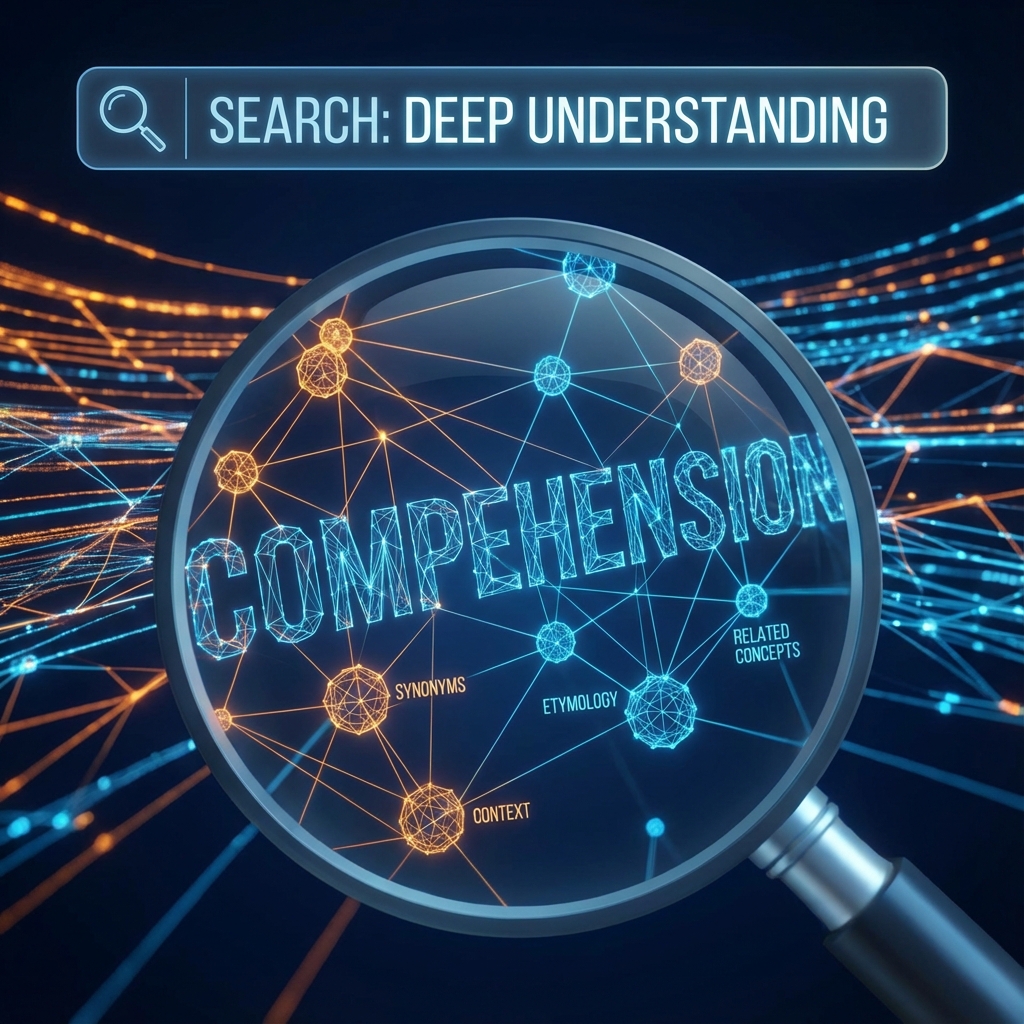
For decades, legal tech has tried to solve information retrieval with keywords. You search for "car," and hope you find documents about "automobiles." This failed because law is not about words; it is about concepts.
This article details the failure of semantic search and the necessity of conceptual mapping.
Key Concepts
Search must ascend from syntax to semantics.
- Vocabulary Mismatch — The gap between the words a user searches and the archaic words used in legal texts.
- Polysemy — Words that mean different things in different contexts (e.g., "Trust" in finance vs. "Trust" in belief).
- Conceptual Indexing — Tagging content by its legal meaning/effect, not just its text.
The Vocabulary Mismatch
A junior associate searches for "firing an employee." The employment contract uses the term "involuntary termination." A keyword search returns zero results, even though the answer is there.
Semantic vector search (embeddings) tries to fix this, but often lacks the precision required for law, conflating "contractor" with "employee" because they appear in similar contexts.
Conceptual Indexing
We solve this by manually mapping concepts. We define a concept called Termination Event, and we link "fired," "let go," "sacked," and "involuntary termination" to that concept.
When you search the concept, you find the law, regardless of the terminology used by the drafter. We built the index the way a senior partner organizes their mind.
Conclusion
Legal search is not a Google problem; it is a taxonomy problem. By strictly defining the concepts that matter to our practice area, we ensure that our search tools find the legal reality, not just the linguistic shadow.
Frequently Asked Questions
Isn't Google good enough?
For general info, yes. For finding a specific clause in a 50-year-old trust? No.
How long does mapping take?
It is an upfront investment. We spent months building the ontology so that retrieval takes milliseconds.
Does it learn new words?
Yes, as we encounter new terminology in practice, we add it to the concept map, improving recall for everyone.
Sources & Further Reading
Read More Articles

How four specialized components turn complex legal rules into deterministic, client-ready documents using the Velcro Model of Law.
Read Article
Ontology as Infrastructure
Why a legal ontology is not a taxonomy, and why it must behave more like infrastructure than metadata.
Read Article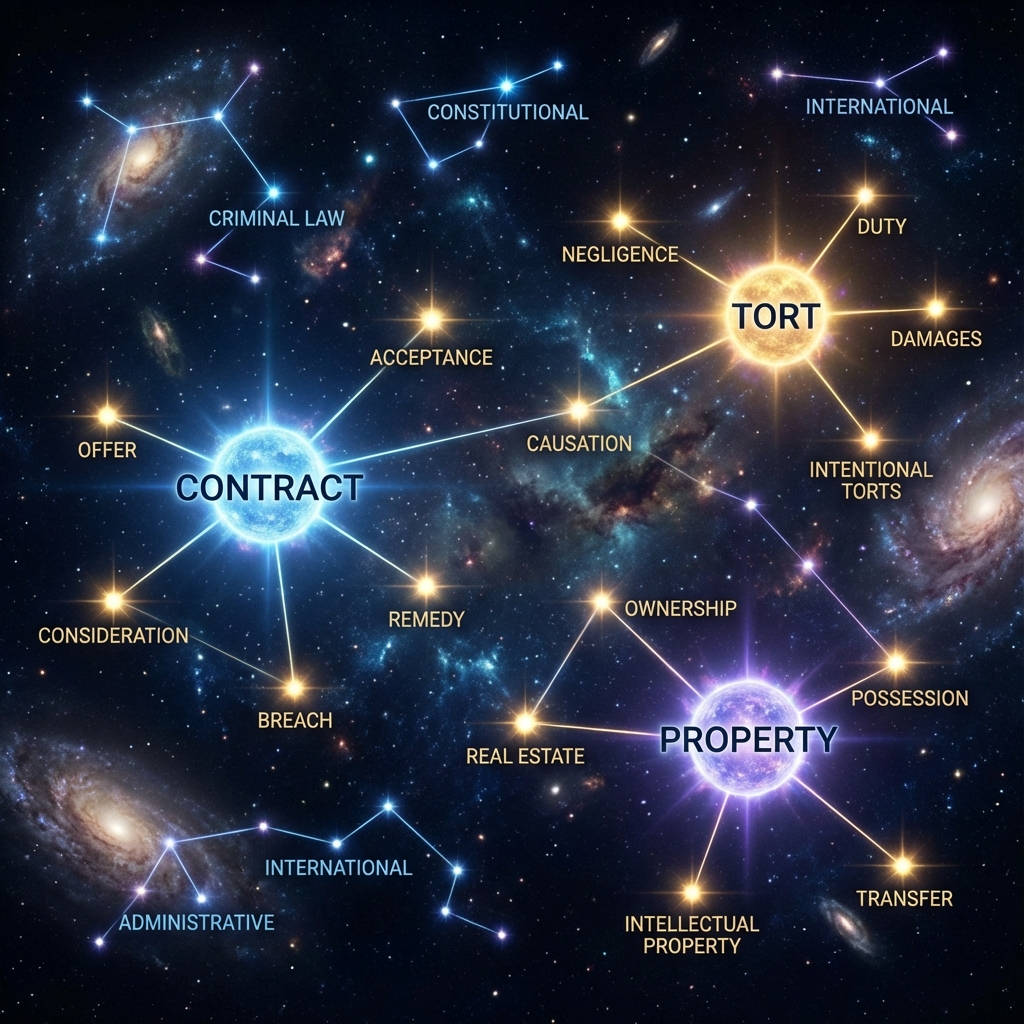
Mapping the Legal Universe
How we extract, filter, and map rules of law across statutes to build a navigable legal universe.
Read Article