Tax Planning Visualization: Making Complex Scenarios Simple

Estate tax planning is mathematically complex, involving interplay between federal exemptions, state thresholds, GST taxes, and growth rates. Explaining these dynamics with a spreadsheet often results in a client's eyes glazing over. They nod politely but remain paralyzed by uncertainty.
This article demonstrates how visualization transforms tax planning from a math lecture into a strategic decision-making session.
Key Concepts
Effective tax modeling allows clients to see the future impact of their choices today.
- Scenario Modeling — The power to compare "Plan A" vs. "Plan B" side-by-side.
- Temporal Visualization — Showing how tax liabilities grow over time, not just at the current moment.
- Decision Confidence — The psychological state required for a client to commit to a complex, expensive strategy.
Scenario Modeling
Telling a client that a spousal lifetime access trust (SLAT) saves money is abstract. Showing them two bar charts—one with the SLAT saving $4M in taxes, and one without it—is compelling.
Visualization moves the conversation from the mechanics of the vehicle to the value of the result. It answers the question, "Is this worth the hassle?" with a resounding yes.
Temporal Visualization
Most clients struggle to appreciate the time value of money or the compounding effect of taxes. A static number on a balance sheet doesn't convey urgency. A line graph showing the estate tax bill crossing the $10M mark in 2032 creates a call to action.
Visualizing time turns a "someday" problem into a "today" problem.
Conclusion
Complexity is the enemy of execution. Clients do not implement strategies they do not understand, no matter how much tax they save.
By simplifying the complex into the visual, attorneys empower their clients to make bold, sophisticated financial decisions.
Frequently Asked Questions
How precise do the numbers need to be?
Estimates are sufficient for planning. The goal is directional correctness, not accounting precision.
What if tax laws change?
Models are snapshots. Good software allows you to toggle assumptions (like the 2026 sunset) to show sensitivity to legislative risk.
Is this advice or education?
It is educational modeling. Always disclaim that actual results will vary based on investment performance and law changes.
Sources & Further Reading
Read More Articles

How four specialized components turn complex legal rules into deterministic, client-ready documents using the Velcro Model of Law.
Read Article
Ontology as Infrastructure
Why a legal ontology is not a taxonomy, and why it must behave more like infrastructure than metadata.
Read Article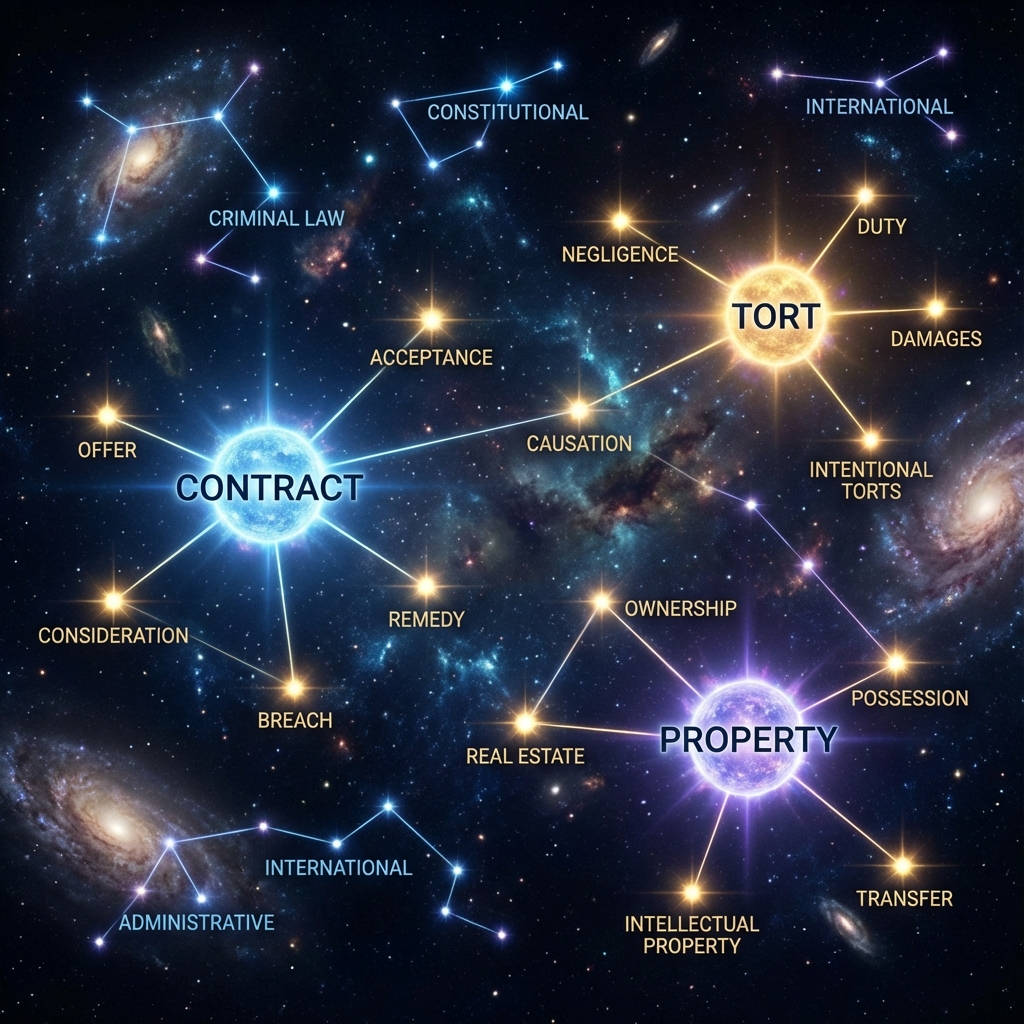
Mapping the Legal Universe
How we extract, filter, and map rules of law across statutes to build a navigable legal universe.
Read Article