Document Automation vs. Document Assembly: What's the Difference?

Many attorneys use the terms "Document Assembly" and "Document Automation" interchangeably. They are not the same. Assembly is 'Mad Libs'—filling in blanks in a pre-written text. Automation is software that constructs the text itself based on logic.
This distinction is the difference between a tool that saves 5 minutes and a tool that saves 5 hours.
Key Concepts
Moving from filling blanks to computing language.
- Active Logic — The system decides which paragraphs exist, rather than just populating words inside them.
- Conditional Architecture — Entire sections of a document that appear or disappear based on complex dependencies.
- Dynamic Templating — A template that rearranges its own structure to fit the fact pattern.
Mad Libs vs. Architects
In Document Assembly, the template says: "I leave my [Asset] to [Person]." You type in "Car" and "Bob."
In Document Automation, the system asks: "Does the client have a taxable estate?" If yes, it creates a Credit Shelter Trust article, inserts a Marital Deduction formula, and renumbers the subsequent articles. It didn't just fill a blank; it architected the will.
The Efficiency Gap
Assembly requires you to choose the right template first (e.g., "Will - Married - Trust"). If the client changes their mind, you have to start over with a new template.
Automation uses one master template that morphs. If the client gets divorced, you change one variable, and the document completely reconstructs itself to be appropriate for a single person.
Conclusion
Stop buying software that just types for you. Buy software that thinks with you. True automation is an expert system that safeguards your practice against structural errors, not just typos.
Frequently Asked Questions
Is automation harder to set up?
Yes. It requires coding the logic once. But the payoff is exponential in the drafting phase.
Can I automate my own docs?
Tools like HotDocs or Gavel allow this, but it requires a "legal engineer" mindset to maintain.
What if the logic is wrong?
Garbage in, garbage out. Rigorous testing of the master template is required before deployment.
Sources & Further Reading
Read More Articles

How four specialized components turn complex legal rules into deterministic, client-ready documents using the Velcro Model of Law.
Read Article
Ontology as Infrastructure
Why a legal ontology is not a taxonomy, and why it must behave more like infrastructure than metadata.
Read Article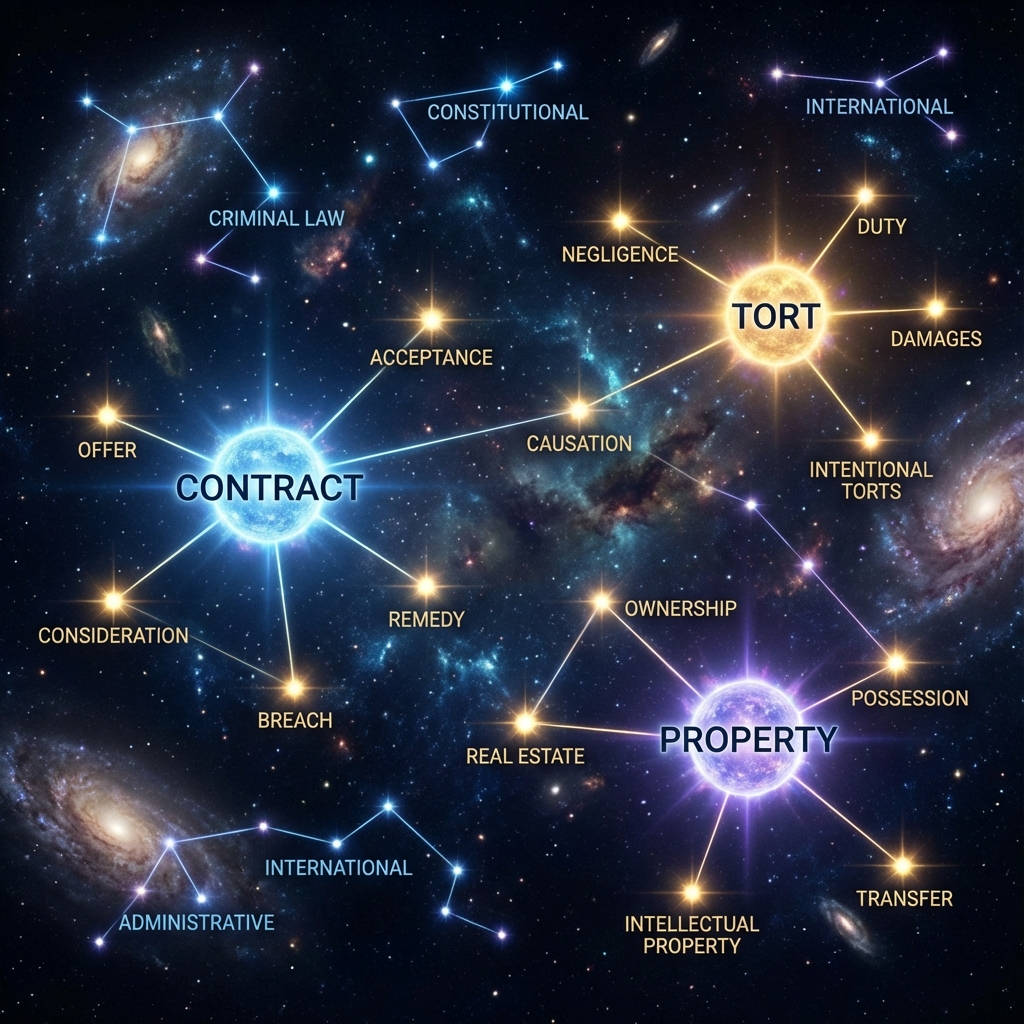
Mapping the Legal Universe
How we extract, filter, and map rules of law across statutes to build a navigable legal universe.
Read Article